🎧We have Answers + 61-0456-789 777 | dj@rediscover.com.au | Mon - Sat: 9am to 6pm

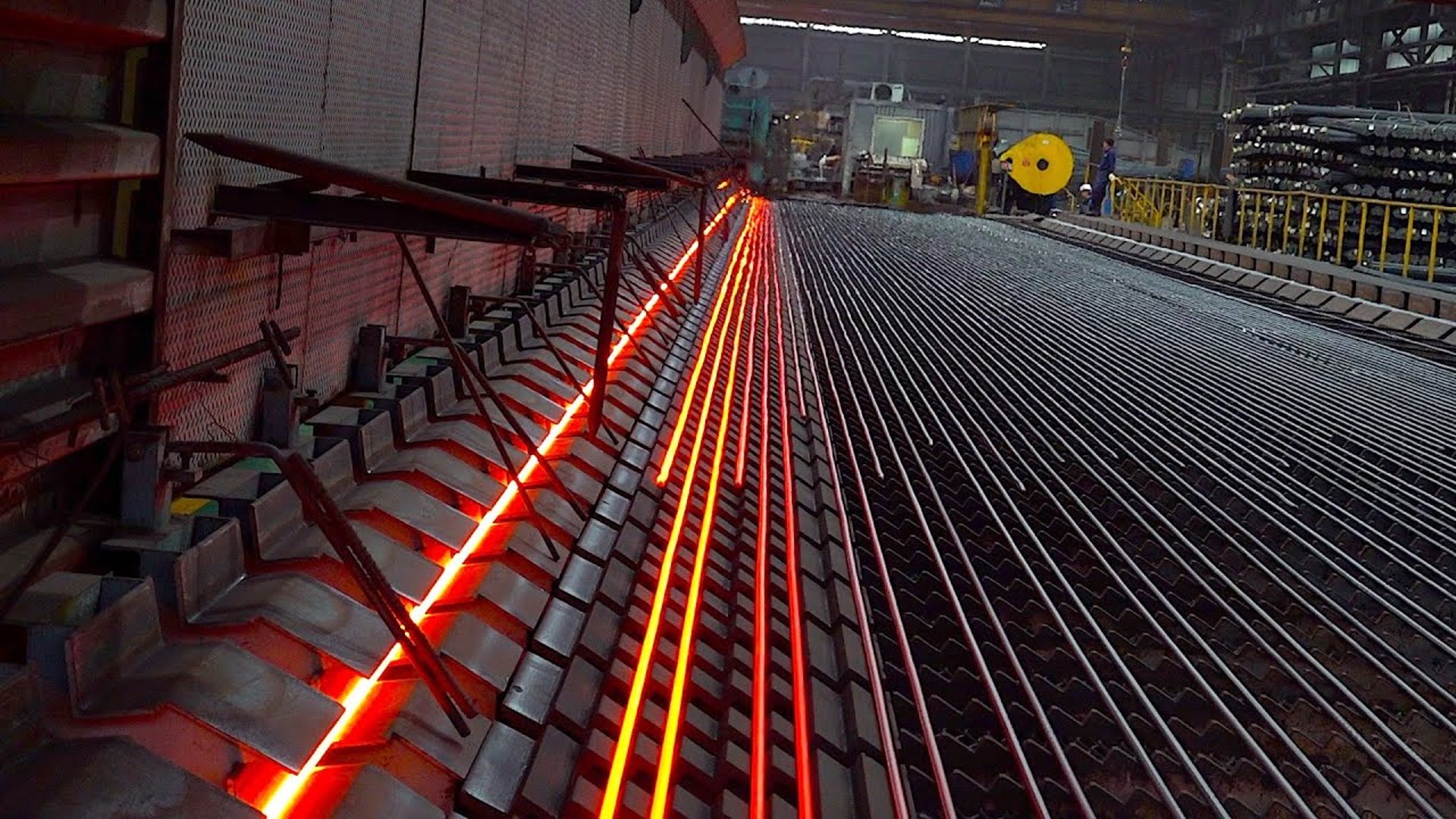
TMT Rebar Manufacturers


REINFORCING BAR
We laboratory test our reinforcing bar to guarantee quality steel every time
Table of Content
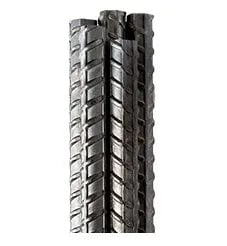
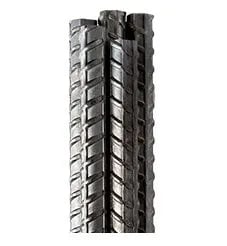
N grade deformed reinforcement bar is the most commonly used rebar product in construction.
A deformed reinforcement bar, or rebar, is a steel bar with ribs or protrusions on its surface that increase its bond strength with concrete. This increased friction and bond strength prevents slippage, making deformed bars more effective than plain bars in high-stress applications like reinforced concrete structures. They are widely used in construction for slabs, beams, and columns and are made from materials like carbon steel, low alloy steel, stainless steel, or epoxy-coated steel.
Key characteristics and benefits
Enhanced bond strength: The surface deformations, or ribs, create a mechanical interlock with the concrete, improving the bond between the steel and the concrete.
Reduced slippage: The increased friction prevents the bar from slipping out of the concrete under tension, which is a critical function in structural integrity.
Greater strength: They are preferred for high-stress applications where enhanced performance is necessary.
Versatile use: Deformed bars are used in a variety of residential, commercial, and infrastructure projects, including reinforced concrete slabs, beams, columns, and precast products.
Variety of materials: They are made from carbon steel, low alloy steel, and can also be made from stainless or epoxy-coated steel for corrosive environments.
Common sizes
Deformed bars come in a range of diameters, such as 6mm to 40mm, with corresponding theoretical weights per meter.
For example, a 12mm diameter bar weighs approximately 0.888 to 0.93 kg/m depending on the specific product and standard.
A larger 20mm diameter bar weighs around 2.466 to 2.58 kg/m.
DEFORMED REBAR
ROUND REBAR
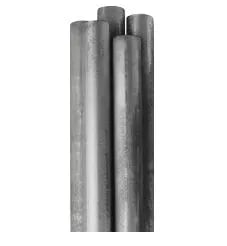
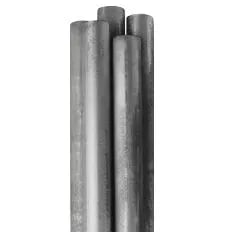
250 MPa grade round steel bar, used in a range of concrete and building applications.
Round rebars come in a wide range of lengths and sizes. It is often used when creating ligatures or applying rebar dowels to structures or projects, as well as to reinforce other bars, and separate mesh in the concrete. This is why reinforcing with rebar is necessary.
What size is round rebar?
Round rebar is N250 grade reinforcing bar which is commonly used throughout residential, commercial and civil projects. Our ACRS certified round reinforcing bar is available in a range of stock lengths and gauge diameters. Our stock lengths are primarily sold in 6 meter and the gauge diameters range from 10mm to 36mm.
What material is used for round bars?
Round bars are known for their versatility and durability. They can be made from a variety of materials, including: Stainless Steel (e.g., SS 304, SS 316) Carbon Steel (e.g., A36, A105)
Round Bars: Round bars handle compressive loads very well because their shape helps distribute stress evenly. This makes them especially good for applications where the pressure is centred, as it helps them resist bending or deforming under heavy loads.
GALVANISED REBAR
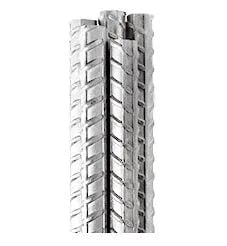
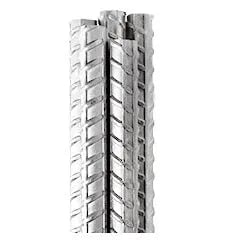
Our standard grade N rebar, with a galvanised protective coating barrier from corrosive elements.
What is galvanized rebar?
Galvanized rebar is steel rebar coated with a thin layer of zinc to protect it from corrosion. This coating is typically applied through a process known as hot-dip galvanizing.
How long does galvanized rebar last?
Only after about 100 years and the complete corrosion of the zinc does the carbon rebar itself corrode and then lead to concrete failure. Because failure of the rebar leads to compromised or failing structural capacity, protecting against premature rebar failure is key.
STOCK REBAR
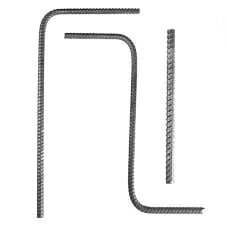
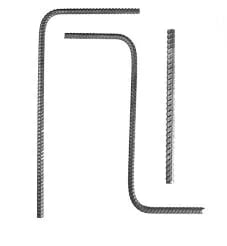
We stock a range of high demand cut and bent rebar in a selection of shapes and sizes.
"Cut and bend rebar" refers to the process of cutting steel rebar to specific lengths and bending it into custom shapes according to project specifications. This is often done at a specialized facility using automated machinery for accuracy and efficiency, providing ready-to-use pieces for construction. Alternatively, it can be done on-site manually with tools like an angle grinder for cutting and a levering pipe for bending, but this is more time-consuming, labor-intensive, and can lead to material waste and less precise results
Process:
Rebar is cut and bent in a factory environment using automated machines based on a provided bar bending schedule (BBS).
Advantages:
Accuracy: Provides precise, consistent shapes and angles.
Efficiency: Saves significant time and labor costs on the construction site.
Reduced waste: Material is cut to exact specifications, minimizing scrap.
Convenience: Rebar arrives on-site ready for immediate use.
Improved site management: Reduces the need for on-site storage, labor, and scrap disposal.
Process:
Cutting: Use an angle grinder with a metal-cutting disc, or a dedicated rebar cutter.
Bending: Place the rebar in a vise, use a pipe for leverage to achieve the desired bend angle, or use a rebar bending machine.
QUALITY
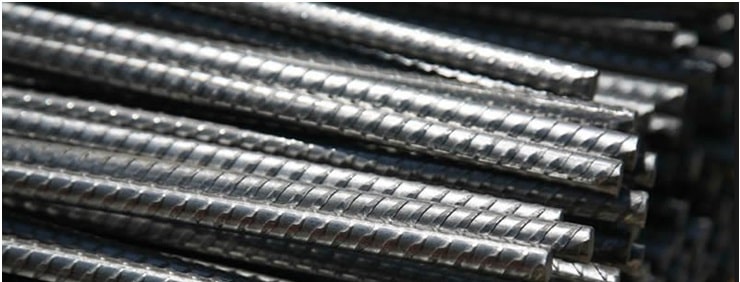
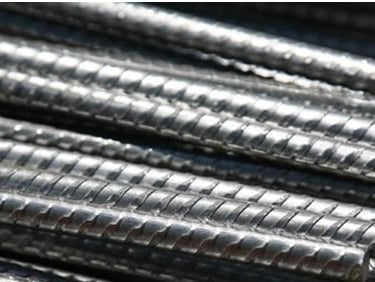
We laboratory test our reinforcing bar to guarantee quality steel every time.
FE 550 D Rebars are used to make Heavy Structures such as bridges and structures that require a high load bearing capacity. They are also used in High Rise buildings due to their load bearing capacity and ductility.
BuildQ TMT FE 550 D Rebars offer much more of everything. Be it strength, durability, ductility or bonding with concrete, BuildQ TMT offers best quality FE 550 D Steel Rebars.
STRENGTH
BuildQ TMT 550 D grade rebars with minimum Yeild strength of 550 ensures extra load carrying capacity in comparison to 500 D grade with minimum Yeild strength of 550.
FLEXIBILITY
High quality TMT bars manufactured in fully integrated steel plant ensures minimum UTS/Ys ratio of >=1.15 . Higher gap between Ys and UTS results in higher ductility of Rebars.
SAVINGS
Additional load carrying capacity of BuildQ TMT rebars leads to fewer number of rebars or reduced diameter results in upto 6% saving on steel quantity.
Reach us for quality products
Call
© 2025. All rights reserved.
